Mothers of Penguins: Artistic Authenticity and Social Resonance in Depicting Autism Parenting – Analysis of Film Techniques and Cultural Impact
Introduction: Context, Thesis, and Theoretical Framework
The Polish television series Matki Pingwinów (Mothers of Penguins), released on Netflix in 2024, has garnered significant attention for its portrayal of families raising children on the autism spectrum. This paper aims to analyse how the series achieves artistic authenticity and social resonance by examining its film techniques, scenography, screenplay, acting performances, and audience reception. The central thesis is that Matki Pingwinów successfully employs a blend of realistic aesthetics, inspired by documentary traditions like cinéma vérité, and narrative strategies common to dramatic storytelling to create an empathetic and impactful representation of autism parenting, thereby contributing meaningfully to social discourse on disability, inclusion, and the ethics of representation.
Methodologically, this analysis involves a close reading of the series' formal elements (cinematography, editing, sound, scenography) and narrative components (plot, character development, dialogue), contextualized within theories of documentary storytelling, media representation, and narrative ethics. We will explore how the series navigates the complex terrain of depicting a neurodevelopmental condition like Autism Spectrum Disorder (ASD) – understood here as a condition characterized by challenges with social communication and interaction, and restricted or repetitive behaviours, interests, or activities (American Psychiatric Association, 2013) – while striving for artistic authenticity. Authenticity, in this context, refers not necessarily to a direct, unmediated reflection of reality (an impossibility in any mediated form), but rather to the creation of a believable, emotionally resonant world that respects the lived experiences it portrays (Beattie, 2004).
The analysis draws upon concepts from documentary film theory, particularly the tension between representing reality and the inherent subjectivity of the filmmaker's perspective. While Matki Pingwinów is a fictional drama, its adoption of techniques associated with cinéma vérité – such as handheld cameras and natural lighting – signals an aspiration towards realism and immediacy, blurring the lines often drawn between fiction and non-fiction (Beattie, 2004). Furthermore, following Bernard (2010), we acknowledge that even non-fiction narratives utilize universal storytelling elements like plot structure, character arcs, and a distinct standpoint. Understanding how these elements function in Matki Pingwinów is crucial to evaluating its effectiveness.
Film Techniques and Scenography
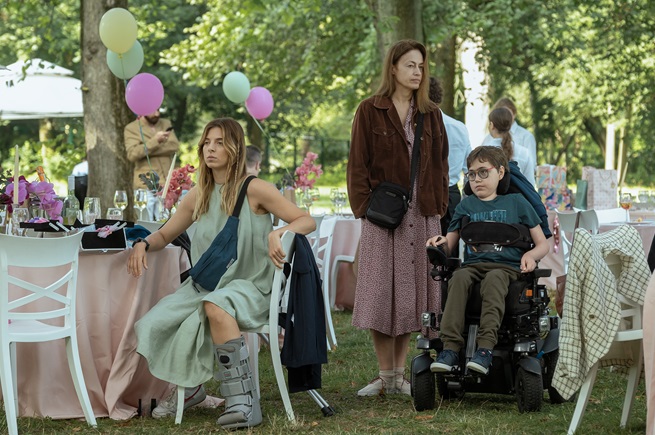
The visual and technical aspects of Matki Pingwinów stand out as integral elements that enhance the series' emotional resonance and realism. The directors, Klara Kochańska-Bajon and Jagoda Szelc, employ an approach reminiscent of cinéma vérité, characterized by its raw, unembellished visual style (Beattie, 2004). This technique, often defined by its aim to capture reality with minimal directorial intervention, gives the audience an intimate, almost documentary-like view of the characters’ lives, drawing them deeper into the story. Film techniques such as handheld camera work and the prevalent use of natural lighting create a sense of immediacy and authenticity, making the audience feel as though they are observing real-life events rather than a conventionally polished fictional narrative. The subtle, understated cinematography avoids the overt dramatization often seen in traditional TV dramas, instead opting for a tone that mirrors the quiet struggles and moments of joy experienced by families raising children with disabilities. This stylistic choice aligns with the series' aspiration to present an authentic portrayal, grounding the drama in a sense of lived reality.
The scenography, crafted by Alicja Kazimierczak, further underscores the series' commitment to authenticity. The settings reflect the lived realities of the characters, with particular attention paid to the details of domestic spaces. Homes are portrayed as functional rather than idealized, filled with the clutter and chaos typical of families with young children, echoing findings in studies on family home environments and autism (e.g., Hedley et al., 2006, who discuss the importance of home environments). These spaces are not only visually engaging but also emotionally evocative, as they reflect the mental and emotional states of the characters. For instance, the meticulous organization of one parent’s home contrasts sharply with the disarray in another, symbolizing their differing approaches to coping with the demands of parenting a child on the autism spectrum.
Moreover, the series uses location-based storytelling to expand its emotional landscape. Scenes set in therapy centres, schools, and community spaces highlight the societal structures that intersect with the personal struggles of the families. Each location is imbued with a sense of purpose, serving not just as a backdrop but as a narrative tool that reveals the complexities of navigating public and private life with a child with special needs. By combining authentic visuals with carefully chosen environments, Matki Pingwinów offers a textured and deeply resonant viewing experience that invites audiences to engage with the nuances of its subject, reflecting a documentary impulse within its fictional framework (Bernard, 2010).
Acting Performances
The acting performances in Matki Pingwinów are a cornerstone of the series’ success, with the cast delivering deeply authentic and emotionally charged portrayals that resonate with viewers. Masza Wągrocka, in the role of Kamila Barska, provides a standout performance as a mother grappling with the complexities of raising a child diagnosed with autism. Her character’s emotional journey—from denial and frustration to acceptance and empowerment—is depicted with remarkable subtlety. Wągrocka skilfully captures the raw vulnerability and resilience of a parent navigating uncharted emotional territory, allowing the audience to connect with Kamila’s struggles on a personal level. This nuanced portrayal avoids simplistic representations often found in media depictions of disability parenting.
Similarly, Barbara Wypych as Ula Wojtal and Magdalena Różczka as Tatiana Tracz bring a nuanced depth to their roles as two other mothers facing unique challenges in their parenting journeys. Wypych’s portrayal of Ula is particularly compelling; she balances moments of quiet despair with bursts of fierce advocacy for her child, creating a character that feels profoundly real. Różczka’s performance, meanwhile, adds a sense of calm determination to the ensemble, showcasing the diverse emotional responses parents have when confronted with the challenges of raising children with special needs. These performances contribute significantly to the series' exploration of the varied experiences within the autism community, reflecting the complex realities discussed in parent-focused research (e.g., Pinto et al., 2024, on the experiences of autistic mothers).
The supporting cast, including the child actors, also deserves recognition. By casting children with disabilities, the directors not only lend authenticity to the series but also provide a platform for these young performers to shine, addressing ethical considerations around representation (Murray, 2008). Their natural and unfiltered performances add layers of realism, allowing the audience to see the world through their eyes. Scenes between parents and children are particularly poignant, as the actors convey a wide range of emotions—love, frustration, joy, and exhaustion — with such sincerity that it transcends the screen.
Audience and critical reactions have repeatedly highlighted the ensemble cast as one of the series’ greatest strengths. On platforms like Filmweb, viewers have praised the performances for their emotional depth and relatability (Filmweb, 2024). Many have noted that the actors successfully avoid clichés often associated with portrayals of disability, instead presenting fully realized, multidimensional characters. The chemistry among the cast members is palpable, as their interactions feel organic and unscripted, further enhancing the series' authentic tone. Together, the actors bring Matki Pingwinów to life, making it not just a story about autism but a deeply human narrative about love, resilience, and community.

Screenplay and Dialogues
The screenplay of Matki Pingwinów is a masterful blend of authenticity, sensitivity, and relatability, drawing its strength from the deeply personal experiences of co-creator Klara Kochańska-Bajon. Developed in collaboration with Dorota Trzaska and Nina Lewandowska, the script is notable for its ability to capture the raw and complex emotions of parenting children on the autism spectrum. What sets the screenplay apart is its refusal to romanticize or simplify the challenges faced by its characters. Instead, it presents a balanced and multifaceted portrayal of their lives, showcasing moments of frustration, fear, and exhaustion alongside instances of love, joy, and triumph. This nuanced approach ensures that the story resonates with a wide audience, offering both representation for those with similar experiences and insight for those unfamiliar with the subject, aligning with principles of effective documentary storytelling that prioritize complexity over simplification (Bernard, 2010).
The dialogues are one of the series’ standout features, characterized by their natural and unfiltered quality. Conversations between characters are not polished or idealized, but instead reflect the sometimes messy and emotionally charged realities of real-life interactions. This authenticity allows the audience to deeply connect with the characters, as their words and emotions feel genuine and relatable. The script avoids clichés and overdramatization, instead opting for subtle and realistic exchanges that mirror everyday conversations. For instance, scenes where parents discuss their children’s progress — or lack thereof — are laced with a mix of hope and frustration, encapsulating the bittersweet nature of their experiences. As noted in a Filmweb review, “The parents are not depicted as saints; they lose patience, make mistakes, and sometimes act selfishly, just like anyone else. This honesty makes them deeply human and relatable” (Filmweb, 2024). This commitment to portraying flawed, complex characters contributes to the narrative's ethical grounding, avoiding hagiography and presenting relatable human struggles (Habermas & Fultner, 2008).
Another significant aspect of the screenplay is its ability to convey the unspoken. Many of the most powerful moments in Matki Pingwinów are found in what is left unsaid — the lingering silences, hesitant pauses, or loaded glances between characters. These subtle cues speak volumes about the emotional weight carried by the parents and their children, adding layers of complexity to the narrative. Through its carefully crafted dialogues and realistic scenarios, the screenplay of Matki Pingwinów not only tells a compelling story but also creates a space for empathy, reflection, and understanding, making it one of the most impactful elements of the series.

Social Opinion and Audience Reception
The social opinion and audience reception of Matki Pingwinów have been overwhelmingly positive, cementing its status as both a cultural touchstone and a catalyst for meaningful dialogue about parenting, autism, and societal attitudes toward disability. From the outset, the series was lauded for addressing a subject matter that is often overlooked in mainstream media — raising children on the autism spectrum. Critics and audiences alike have praised its honest and empathetic portrayal of the challenges and triumphs experienced by families with children who have special needs. On Filmweb, a prominent Polish entertainment platform, the series holds a strong audience rating of 7.6/10, based on over 16,000 votes.2 This high score reflects the resonance it has found with a broad demographic of viewers, including parents of children with disabilities, educators, and general audiences who were drawn to its relatable and heartfelt storytelling.
On social media and online forums (e.g., Forum dyskusyjne Gazeta.pl, 2024; Joe Monster, 2024), discussions about the series reveal its emotional impact and capacity to foster empathy. Many viewers have expressed how deeply they connected with the characters and their struggles. Posts on parenting forums highlight how Matki Pingwinów has sparked conversations about the daily realities of raising children with autism, such as navigating educational systems, accessing therapies, and dealing with societal judgments. Comments like, “This show finally talks about parents, not just the children,” underscore the rarity and significance of its perspective. For many, the series has served as a mirror of their experiences, validating feelings of exhaustion, hope, and determination that are often underrepresented in the media, potentially reducing stigma and fostering community (Corrigan & Watson, 2002).
Critics have also praised the series for its ability to address a sensitive topic without falling into the traps of melodrama or sentimentality. Instead, Matki Pingwinów strikes a balance between poignancy and humour, capturing the full spectrum of human emotion. Reviewers have noted how the show’s humour provides moments of levity, making its heavier themes more accessible. Blogs such as “Autyzm po ludzku” commend its role in raising awareness and humanizing the experiences of families living with autism: “It’s not just a story about autism—it’s a story about resilience, about love, and about finding joy in the small victories” (Sułkowska, 2024). This reception suggests the series successfully navigates the ethical considerations of representation, offering a humanizing portrayal rather than one focused solely on deficit or tragedy (Murray, 2008).
Beyond Poland, the series has started to attract attention from international audiences through Netflix, positioning itself as a meaningful contribution to global conversations about inclusion and representation. The authentic portrayal of autism and its impact on families has resonated with viewers worldwide, prompting calls for similar stories in other cultural contexts. By presenting its characters with dignity, complexity, and honesty, Matki Pingwinów has become more than just a television series — it has become a tool for fostering understanding and a symbol of hope for families who see themselves in its narrative. As conversations about disability and inclusion continue to gain prominence, Matki Pingwinów stands as an exemplary work that bridges the gap between entertainment and advocacy, leaving a lasting impression on its audience.
Conclusion
Matki Pingwinów represents a significant and vital addition to contemporary Polish television and the broader landscape of media dealing with disability. Through its thoughtful integration of cinéma verité-inspired techniques, authentic scenography, a nuanced screenplay rooted in lived experience, and outstandingly genuine performances, the series offers a compelling and deeply human portrayal of families raising children on the autism spectrum.
The series successfully navigates the complexities of artistic authenticity and social responsibility. By avoiding stereotypes and sentimentality, and instead focusing on the multifaceted realities of its characters' lives – their struggles, joys, flaws, and resilience – Matki Pingwinów achieves a profound emotional resonance. Its positive reception highlights its capacity to foster empathy, challenge societal misconceptions about autism, and contribute to important conversations about inclusion, representation, and the ethical dimensions of storytelling. Ultimately, Matki Pingwinów stands as a powerful example of how television drama can function as both a compelling artistic achievement and a meaningful social statement, reminding us of the crucial role narrative plays in shaping understanding and fostering a more inclusive society.
Bibliography
-
American Psychiatric Association. (2013). Diagnostic and statistical manual of mental disorders (5th ed.). Arlington, VA: American Psychiatric Publishing.
-
Beattie, K. (2004). Documentary Screens: Non-Fiction Film and Television. Palgrave Macmillan.
-
Bernard, S. (2010). Documentary Storytelling: Making Stronger and More Dramatic Nonfiction Films (3rd ed.). Routledge.
-
Corrigan, P. W., & Watson, A. C. (2002). Understanding the impact of stigma on people with mental illness. World Psychiatry, 1(1), 16–20.
-
Dyskusje, Forum - Matki pingwinów (2024). Filmweb. [Online] Available from: Link (Accessed: 30 April 2025).
-
Habermas, J. & Fultner, B. (Trans.). (2008). The Language Game of Responsible Agency and the Problem of Free Will: How Can Epistemic Dualism Be Reconciled with Ontological Monism?. Philosophical Explorations, 10(1), 13-50.
-
Hedley, D., McConnell, D., & Furlonger, B. (2006). Autism and family home movies: A comprehensive review. Autism, 10(4), 347–367. [Online] Available from: Link (Accessed: 30 April 2025).
-
Matki pingwinów - emama. (2024). Forum dyskusyjne Gazeta.pl. [Online] Available from: Link (Accessed: 30 April 2025).
-
Matki pingwinów. (2024). Joe Monster. [Online] Available from: Link (Accessed: 30 April 2025).
-
Murray, S. (2008). Representing Autism: Culture, Narrative, Fascination. Liverpool University Press.
-
Pinto, R. I., Pinto, A. I., & Pereira, A. (2024). ‘I Am An Autistic Mother With an Autistic Child’: Documentary Analysis of Family Overload. Journal of Autism and Developmental Disorders. [Online] Available from: Link (Accessed: 30 April 2025).
-
Sułkowska, A. (2024). Matki pingwinów – recenzja. Autyzm po ludzku, 20 November. [Online] Available from: Link (Accessed: 30 April 2025).