How to Improve Brand Visibility in Google and GenAI Using AI Coding Agents and the ora Methodology
Most founders and small teams still treat visibility as a single-channel SEO problem. That model is now incomplete, because brands are increasingly evaluated by both human users and AI agents that search, compare, and sometimes execute tasks on a user’s behalf. ora
I learned this in a very practical way while checking my own site on ora: sendyka.dev currently scores 77/100, which is labeled “B Competitive,” with stronger performance in identity and auth than in discovery and agentic discoverability. That result is useful because it shows where effort should go next instead of hiding behind vague “AI visibility” advice. ora
Why this matters now
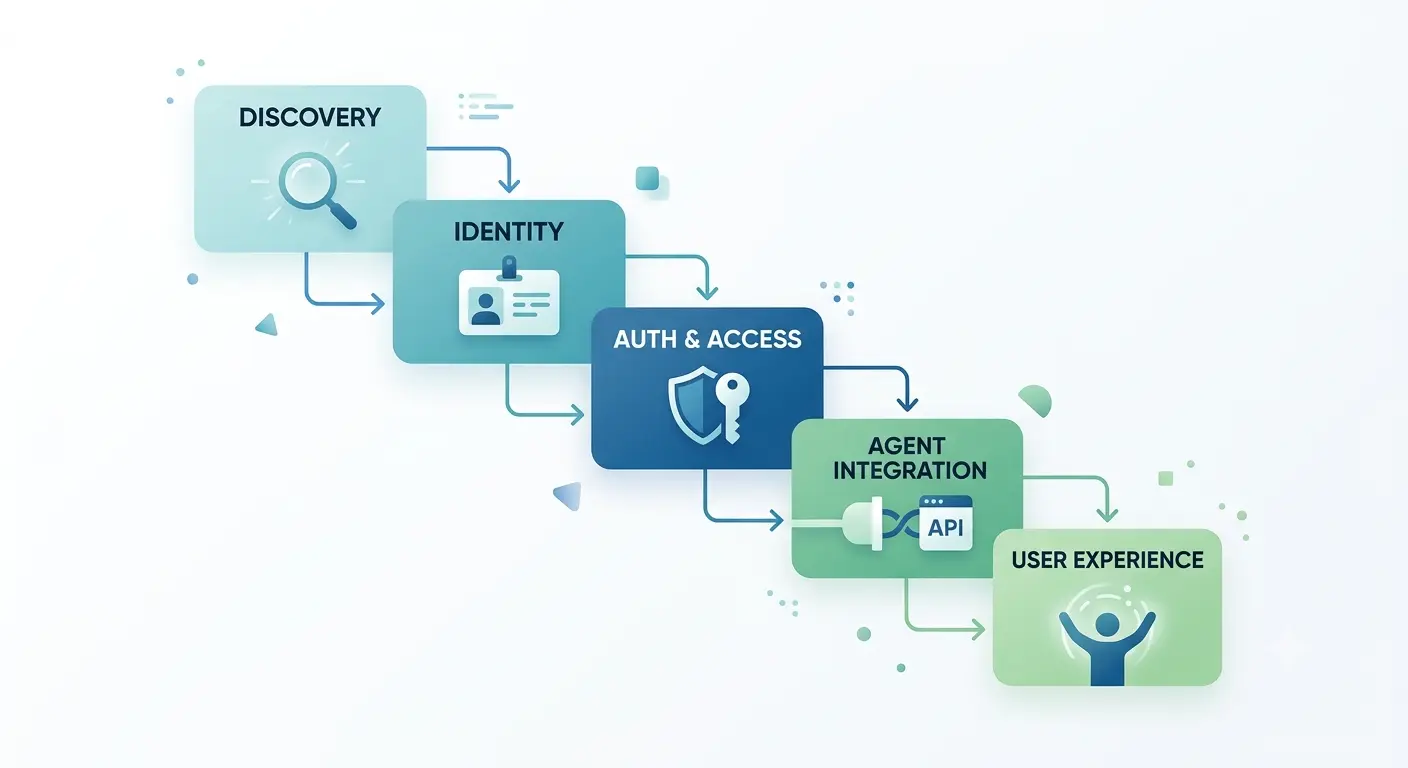
The ora methodology treats visibility as a journey rather than a ranking: can an agent discover you, understand you, access your product, integrate reliably, and hand the result back to a human? That framing matters because agentic systems are no longer just summarizers; they are increasingly part of vendor selection and workflow execution. swagger
For founders, freelancers, and SMBs, this shift can feel abstract until it becomes operational. The good news is that AI coding agents can function as implementation partners, helping you audit repositories, generate patches, tighten documentation, and close technical gaps faster than manual work alone. ora
The ora framework
ora breaks the problem into five layers: Discovery, Identity, Auth & Access, Agent Integration, and User Experience. Each layer can fail independently, which is why a brand can be discoverable but still unusable, or technically integrated but badly described. ora
Here is the practical reading of the model:
- Discovery asks whether agents can find and recommend you. ora
- Identity asks whether agents correctly understand what you do. ora
- Auth & Access asks whether agents can authenticate and act. oauth
- Agent Integration asks whether the plumbing is stable enough for repeated tool use and error recovery. ora
- User Experience asks whether the agent can hand control back to a human in a trustworthy way. ora
How AI coding agents fit in
The methodology is tool-agnostic, so it can be applied in Cursor, GitHub Copilot, Claude Code, Codex, or similar assistants with repository context. What matters is the workflow: ask the agent to inspect specific files, generate a patch, validate the result, and document what changed. swagger
That approach is especially useful for non-expert teams because it turns a fuzzy strategy question into a sequence of concrete implementation tasks. Instead of “improve AI visibility,” the team can ask for a metadata audit, an OpenAPI check, an auth-flow review, or a handoff-UX patch. swagger
Discovery layer
Discovery failures usually come from weak topical clarity and fragmented machine-readable signals. ora explicitly looks at whether agents can find you by name, by category, across the answer engines they rely on, and in what AI models actually recall about you. ora
For founders and SMBs, the first steps are straightforward:
- Align titles, descriptions, and headings with the problem-language users actually search for.
- Make key product pages crawlable and well-linked internally.
- Publish concise machine-readable guidance for AI consumption, including
llms.txtwhere appropriate. yoast
I would treat llms.txt as an emerging convention rather than a settled universal standard, because that is how the project itself and related ecosystem discussions frame it. github
What to ask your coding agent
Use prompts like these:
- “Audit my site for discoverability signals: metadata consistency, sitemap and robots configuration, and missing pages for key service intents.”
- “Generate a prioritized fix list and implement high-impact metadata and crawl fixes first.”
- “Check whether
llms.txtand related AI-discovery files are present, coherent with site positioning, and internally consistent.”
The key beginner mistake is trying to optimize everything at once. Focus first on high-intent pages and one market segment. ora
Identity layer
Identity is where many brands lose trust with AI systems. Humans can infer context from design and tone, but agents rely on explicit structure and consistent language. ora
In practice, your site should answer four questions clearly: what the product is, who it is for, what outcome it produces, and when it should be chosen over alternatives. ora validates that kind of clarity through surfaces such as llms.txt, JSON-LD, sitemap and robots configuration, metadata consistency, and pricing/docs clarity. ora
For my own site, the score breakdown suggests this layer is comparatively strong, which is useful because it confirms that the brand story is at least legible. Still, strong identity does not compensate for weak discovery, which is exactly why the layer model is useful. ora
What to ask your coding agent
- “Compare my homepage, docs, and pricing copy. Find contradictory positioning statements and propose one canonical wording.”
- “Validate JSON-LD and metadata for consistency with the same product description.”
- “Refactor key pages so service scope, audience, and value proposition are explicit in headings and summaries.”
A useful rule here is to write one canonical two-sentence positioning statement and reuse it everywhere critical. That reduces hallucinated positioning and keeps the brand legible to both humans and agents. ora
Auth and access
Auth and access is where intent becomes execution. ora checks whether agents can authenticate, request scopes, and call usable endpoints, and it treats broken auth paths as dead ends at the moment value should happen. ora
For technical visibility, this means that public documentation is not enough. The product needs a clear OpenAPI spec, a plain-language explanation of authorization flow, and stable machine-readable error handling so integrators can recover when something fails. oauth
What to ask your coding agent
- “Audit all
/apiroutes and generate or update OpenAPI docs for public endpoints.” - “Rewrite auth docs for first-time integrators: required permissions, token flow, and common errors.”
- “Standardize API error responses to machine-parsable JSON with stable error codes and remediation hints.”
For a smaller team, this layer often produces the highest practical leverage because it removes dead ends that are invisible in traditional SEO thinking. ora
Agent integration
Agent integration goes beyond mere access. ora looks for MCP server readiness, streaming support, JSON error responses, SDK coverage, and function-calling compatibility across agent platforms. ora
This is the point where brittle plumbing causes silent failure. A product may be discoverable and authenticated, yet still fail under repeated calls, unstable response shapes, or poor error recovery. ora
What to ask your coding agent
- “Review integration routes for schema stability and backward-compatibility risks.”
- “Add structured error handling for tool failures and retry-safe response patterns.”
- “Check that machine-facing routes return consistent content types and field naming.”
I would keep this layer conceptual for most small teams unless they already expose APIs or workflows to external systems. The main goal is consistency, not architectural grandeur. ora
User experience
The final layer is human handoff. ora explicitly evaluates whether users can interact through agents in a trustworthy way when payment, confirmation, or visual decision-making is required. ora
This layer is easy to underestimate because it is not glamorous, but it often decides whether the whole journey feels reliable. If the handoff UX is confusing, the agent may technically succeed while the user still abandons the flow. ora
What to ask your coding agent
- “Map agent-to-human handoff points and identify friction in forms, confirmations, and decision pages.”
- “Refactor UI copy for high-stakes actions so users understand what happened, what is next, and how to recover.”
- “Add machine-readable UI metadata where platform standards require it.”
A simple test is enough: if an AI assistant sends a user here, can that person complete the action in under two minutes without confusion? ora
Practical workflow
You do not need an enterprise budget to start. A realistic beginner loop is to pick one ora layer each week, ask the coding agent for an audit and fix plan, implement only high-impact changes, validate in staging, and document the decision in plain language. swagger
That process works because it converts a broad visibility problem into a controlled series of patches. It also avoids the common trap of fixing metadata while leaving execution paths broken. ora
Prompt pack
A good implementation pattern is to store reusable prompts in the repository so the process is repeatable across tools. Each prompt should target one layer and one output format, such as an audit table, a patch list, or an implementation diff. swagger
A practical structure would be:
discovery-audit.prompt.mdidentity-consistency.prompt.mdauth-access-readiness.prompt.mdagent-integration-reliability.prompt.mdhandoff-ux.prompt.md
Each file should define the objective, input scope, expected output, verification commands, and definition of done. That makes the workflow portable across Copilot, Cursor, Claude Code, Codex, and similar tools. swagger
Common mistakes
The most common mistake is treating this as only SEO. Agent visibility includes execution, not just ranking, so metadata alone cannot solve the problem. swagger
Other mistakes include copy-pasting generic AI advice, over-optimizing metadata while ignoring auth, allowing contradictory claims across pages, and skipping verification after generated fixes. Each of these weakens trust somewhere in the five-layer journey. ora
Limits and caution
A serious methodology should also define its boundaries. Not every business needs deep agent integration on day one, and some improvements will have diminishing returns for simple offerings. ora
I also think it is worth keeping a critical distance from the hype cycle. AI-generated code and documentation still require human review for correctness, compliance, and brand fit, so the right stance is controlled experimentation, not automation theater. swagger
Conclusion
If you are a founder, freelancer, or SMB operator, the ora model gives you a practical map of where agent journeys fail: Discovery, Identity, Auth & Access, Agent Integration, and User Experience. AI coding agents then give you a way to operationalize that map without hiring a large technical team, because they can help you audit, patch, validate, and document in smaller loops. swagger
My own ora result is a good reminder that this is not abstract theory: if the score is strong in identity but weaker in discoverability, the next move is not more branding slogans but better machine-readable visibility and more reliable entry points. In that sense, the strategic shift is from being indexed to being selected and successfully used. ora
References
America Online, Inc. v. OpenAI? No — here is the actual bibliography in APA style:
- llms-txt. (n.d.). The /llms.txt file. https://llmstxt.org/ llmstxt
- Model Context Protocol. (2025). Architecture overview. https://modelcontextprotocol.io/docs/learn
- Model Context Protocol. (2025). Specification (latest). https://modelcontextprotocol.io/specification/latest
- ora. (2026). Methodology. https://ora.run/methodology ora
- ora. (2026). sendyka.dev - ora Agent Readiness Score. https://ora.run/score/sendyka.dev ora
- OpenAPI Initiative. (n.d.). Describing API security. https://learn.openapis.org/specification/security.html
- OAuth.net. (n.d.). OAuth 2.0. https://oauth.net/2/ oauth
- Yoast. (2026, March 30). llms.txt. https://yoast.com/features/llms-txt/ yoast